Why you feel everything so deeply
It is a real, well-studied temperament trait, not a flaw. Here is what the research says, what it costs, what it gives you, and three habits that make it easier to live with.
 By The Better Mode TeamPublished Nov 23, 20269 min read
The short answer
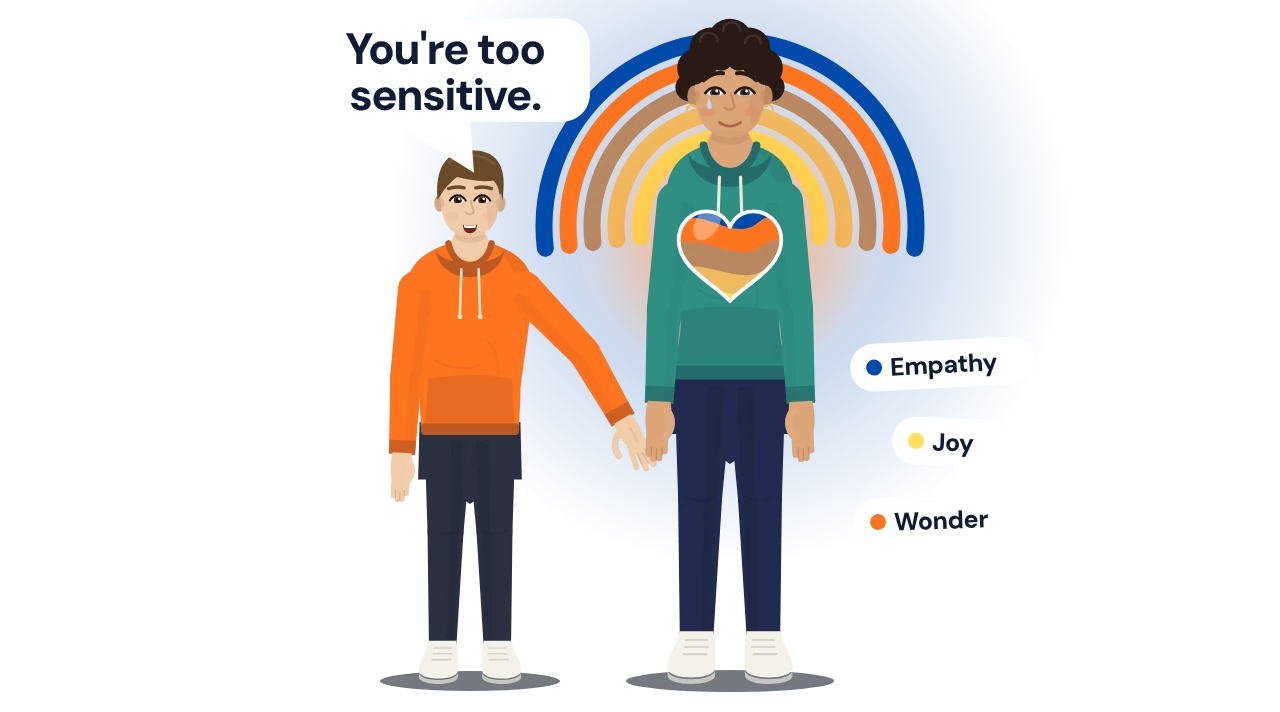
If you feel everything deeply, you most likely sit toward the sensitive end of a well-studied temperament trait called sensory processing sensitivity. Estimates of how common it is run from about one in five to roughly one in three people, depending on how it is measured.
It is not a disorder. A sensitive nervous system takes in more detail and works through it more thoroughly, so days feel louder and emotions land harder. The same trait helps you notice what others miss and gain more from good support.
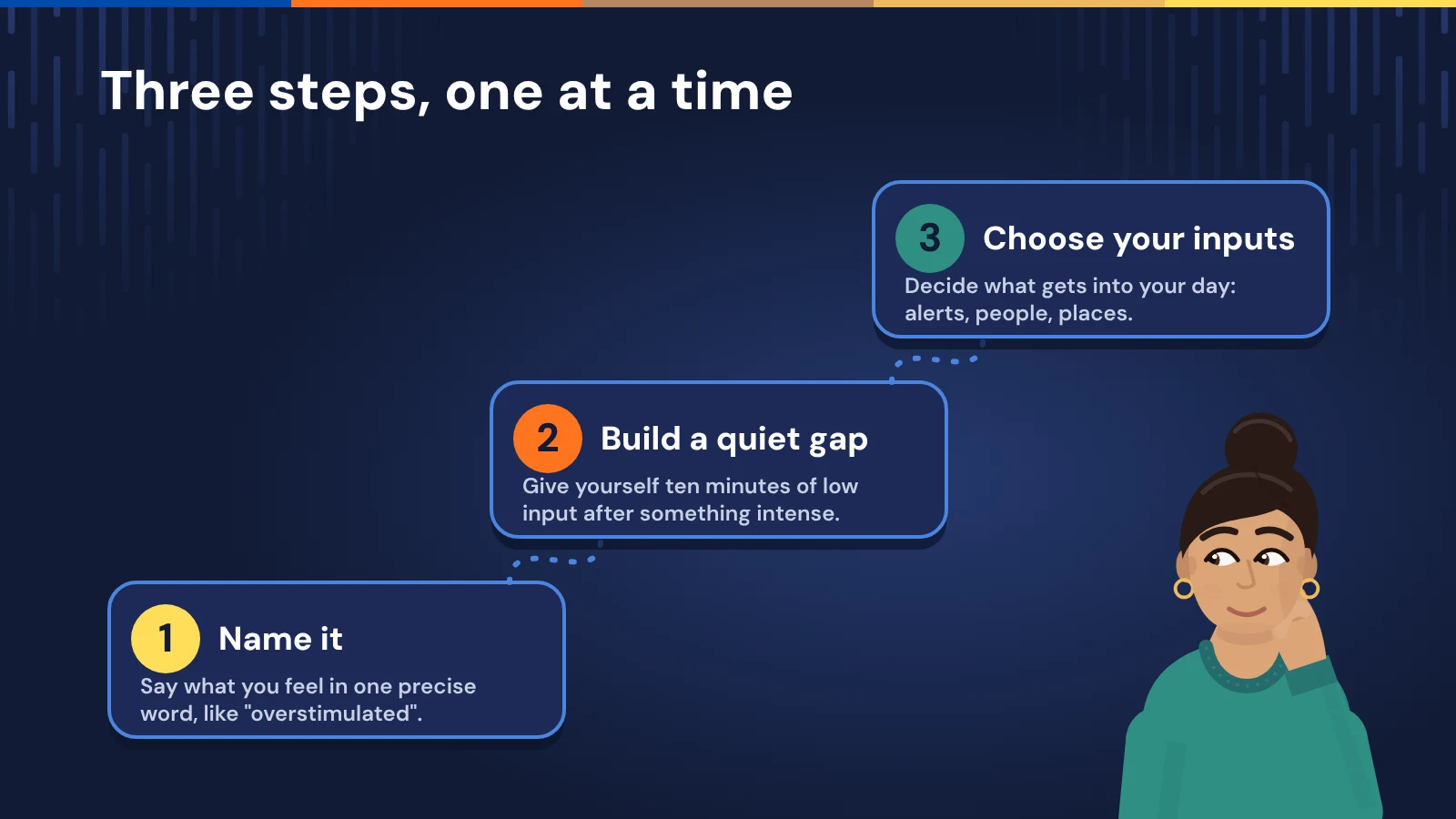
Three habits help: name the feeling, build a quiet gap after intense moments, and choose what you let in.
Watch the video
Prefer to watch first? The full video runs about three and a half minutes. The article goes further into the research.
Key takeaways
- Feeling everything deeply usually reflects a normal trait, sensory processing sensitivity, not a flaw and not a diagnosis.
- Sensitivity is a spectrum. A large 2018 study grouped people as about 31 percent high, 40 percent medium and 29 percent low.
- The same sensitivity that makes hard days harder also makes good support work better.
- Naming a feeling precisely has the strongest research behind it. A quiet gap and chosen inputs are sensible, practical additions.
What feeling everything deeply actually is
The research name is sensory processing sensitivity, or SPS. Psychologists Elaine and Arthur Aron developed the idea in the 1990s, and Elaine Aron‘s book The Highly Sensitive Person brought it to a wide audience.
The core claim is simple. Some nervous systems take in more of what is around them, from sounds and light to social cues to their own emotions, and process it more thoroughly before acting.
Aron describes four parts, often remembered as DOES. They tend to show up together.
The four go together. Someone who is easily overwhelmed but does not process things deeply or notice fine detail is describing something else.
The two percentages differ because they come from different methods. Aron’s one-in-five figure grew out of early questionnaire work. The 2018 study used statistical grouping on a sensitivity questionnaire and found three clusters.
Neither is a hard line. Sensitivity runs along a continuum, so where the cut-off falls depends on how you draw it.
What the research shows
The best single overview is a 2019 review by Corina Greven and colleagues. It places SPS inside a wider idea called environmental sensitivity: people differ in how strongly they register and respond to experiences, both bad and good. A twin study of adolescents also puts its heritability at about 47 percent.
Brain imaging adds some detail, with a clear caveat that the samples are small. In a 2011 fMRI study, Jagiellowicz and colleagues asked people to spot subtle differences between pairs of scenes.
Participants with higher sensitivity showed more activity in regions tied to attention and visual processing during those judgements. In a 2014 study led by Bianca Acevedo, highly sensitive people looking at photos of happy and sad faces showed stronger activation in areas linked to awareness, empathy and emotional processing, including the insula. Treat both as early signals that fit the theory, not settled proof.
Dandelions, tulips and orchids
Developmental psychologist W. Thomas Boyce gave this research its best-known image. Most children are like dandelions: they grow in nearly any conditions. A smaller group are like orchids: they struggle in neglect or chaos and flourish with careful tending.
His work with Bruce Ellis on biological sensitivity to context laid out why a highly reactive stress system could be costly in a harsh setting and beneficial in a supportive one. Lionetti and colleagues then tested the idea in adults and children and found a third group in the middle, which they called tulips.
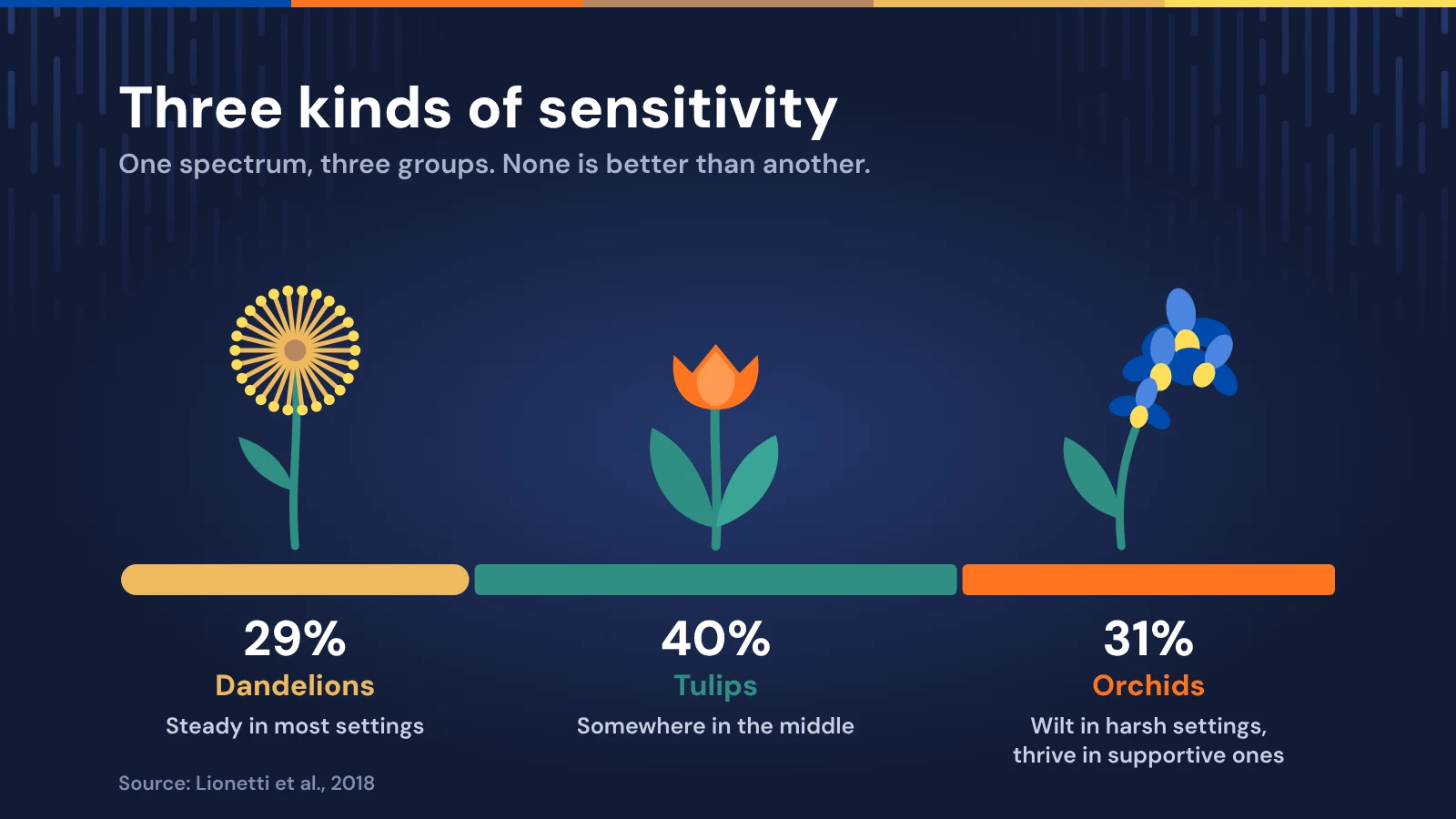
| Group | Share of people | In harsh conditions | In supportive conditions |
|---|---|---|---|
| Dandelions | About 29% | Tend to stay steady | Tend to gain less from extra support |
| Tulips | About 40% | Somewhere in between | Somewhere in between |
| Orchids | About 31% | More strain and more risk of distress | Tend to gain the most from good support |
Share of people from Lionetti et al. (2018). The pattern in the last two columns follows the differential susceptibility and vantage sensitivity literature.
That pattern has two technical names. Differential susceptibility is the idea that some people are more affected by their surroundings for better and for worse. Vantage sensitivity focuses on the better half: the same people tend to benefit more from positive experiences, such as warm relationships or a good intervention.
The practical meaning is that sensitivity is not a weakness to fix. It is a trait whose results depend a lot on the setting around it.
The cost and the upside
Most sensitive people recognise the cost side quickly. The upside takes longer to notice, because it rarely announces itself.
Where it costs
- Long days in loud or busy places leave you flat by evening
- Small decisions take longer because you weigh more
- Other people’s moods get into your own
- Criticism and conflict replay for hours
Where it pays
- You notice tension in a meeting before anyone names it
- You read people and rooms with real accuracy
- Your work shows depth and care
- Good support, good teachers and good people land harder
Both lists come from the same wiring. You cannot keep the noticing and remove the weight, which is why the useful goal is management, not removal.
What it is not
Because sensitivity touches emotion and the senses, it gets confused with several other things. The overlaps are real, but the patterns differ.
| Often mistaken for | How it differs |
|---|---|
| Anxiety | Anxiety centres on worry and perceived threat. Sensitivity is about depth and intensity of processing and is present when you feel safe too. The two can occur together, and sensitive people can be more vulnerable to anxiety when conditions are poor. |
| Autism | Both can involve sensory overload. Autism is a developmental diagnosis with differences in social communication. Sensitivity includes strong attention to social and emotional cues, so the profiles differ, although some people have both. |
| Neuroticism | The two correlate, because both involve strong reactions to stress. Sensitivity also includes positive responsiveness and attention to subtle detail, which neuroticism does not describe. |
| A trauma response | Hypervigilance after trauma is learned and tends to follow an event. Sensitivity is a trait that shows up early in life. The two can coexist, and a clinician can help separate them. |
If you are unsure which describes you, a qualified clinician can assess it properly.
What philosophers noticed first
The idea that feeling strongly is a skill to be handled, not a fault to be removed, is older than psychology. Epictetus, the Stoic teacher, argued that people are disturbed less by events than by the judgements they form about them.
For a sensitive person this is not a call to feel less. It is training in spotting the step between what happened and what you decided it meant, which is where a lot of the extra weight gets added.
Feeling strongly was never the problem for either of the two great ancient schools. Calibration was.
Our summary of Epictetus (Enchiridion 5) and Aristotle (Nicomachean Ethics II.6). This is a paraphrase, not a quotation.Aristotle made a similar point from the other direction. In his account, a good character is not the absence of emotion. It is feeling the right amount, at the right time, about the right things and toward the right people.
Neither thinker prescribed numbness. Both treated strong feeling as raw material that needs good judgement.
Three habits that help
Start with the first. It has the most evidence behind it. The second and third are practical applications of what we know about overstimulation, not tested treatments, and they work best as small experiments.
Name it precisely
In a 2007 brain imaging study, Matthew Lieberman and colleagues found that putting a feeling into words reduced amygdala responses to emotional images and engaged a part of the prefrontal cortex.
Lisa Feldman Barrett and colleagues have reviewed evidence that people who distinguish between emotions in finer detail tend to regulate them better. “Bad” is a blur. “Overstimulated” or “disappointed” tells you what to do next.
Build a quiet gap
Overstimulation is one of the four parts of the trait, so recovery time is a real need, not a luxury. A gap is a short stretch of low input right after something intense, before the next demand arrives.
Choose your inputs
You cannot turn the sensitivity down, but you can decide a lot about what reaches it. That includes alerts, news at night, noisy places and the people around you. Vantage sensitivity suggests the good inputs are worth protecting, because they work harder on you.
A note on mental health
This article is for education and is not medical or mental health advice. If your reactions are affecting your sleep, work or relationships, or you are struggling for weeks at a time, please speak with a qualified professional.
Frequently asked questions
Is being highly sensitive a disorder?
No. Researchers describe sensory processing sensitivity as a normal temperament trait that varies from person to person. It is not a diagnosis. It can sit alongside conditions such as anxiety or depression, and a clinician can help if you are unsure.
How do I know if I am highly sensitive?
The most used tool is Elaine Aron’s 27-item Highly Sensitive Person Scale. A questionnaire can show where you sit on the spectrum, but it is a self-report, not a diagnosis.
The more useful test is practical: do you process things deeply, tire quickly in busy settings, feel emotions strongly and notice subtle details, all together?
Is a highly sensitive person the same as an empath?
No. Empath is a popular word, not a scientific term. Strong empathy and emotional responsiveness are one of the four parts of sensory processing sensitivity, alongside depth of processing, overstimulation and sensitivity to subtle detail.
Is high sensitivity the same as being introverted?
No, though they overlap. Aron and Aron found in 1997 that sensitivity relates to introversion without being the same thing, and many sensitive people enjoy company and stimulation in the right doses.
Can your sensitivity change over time?
The trait itself looks fairly stable and is moderately heritable, around half in a large twin study. What changes is how it shows up. Sleep, stress, workload, support and skills like naming emotions all shift how intense and manageable it feels.
Are sensitive people more likely to develop anxiety or depression?
Research links high sensitivity with more distress when conditions are stressful or unsupportive. The same research shows better outcomes when conditions are supportive, so it raises risk in some environments rather than being a fixed path.
When should I talk to a professional?
Talk to a qualified professional if your reactions regularly get in the way of sleep, work or relationships, if low mood or worry lasts for weeks, or if you have thoughts of harming yourself. If you are in immediate danger, contact your local emergency number or a crisis line.
References
- Aron, E. N., & Aron, A. (1997). Sensory-processing sensitivity and its relation to introversion and emotionality. Journal of Personality and Social Psychology, 73(2), 345-368. DOI
- Aron, E. N. (1996). The Highly Sensitive Person: How to Thrive When the World Overwhelms You. Broadway Books.
- Greven, C. U., Lionetti, F., Booth, C., et al. (2019). Sensory processing sensitivity in the context of environmental sensitivity: A critical review and development of research agenda. Neuroscience and Biobehavioral Reviews, 98, 287-305. DOI
- Lionetti, F., Aron, A., Aron, E. N., et al. (2018). Dandelions, tulips and orchids: evidence for the existence of low-sensitive, medium-sensitive and high-sensitive individuals. Translational Psychiatry, 8, 24. DOI
- Acevedo, B. P., Aron, E. N., Aron, A., et al. (2014). The highly sensitive brain: an fMRI study of sensory processing sensitivity and response to others’ emotions. Brain and Behavior, 4(4), 580-594. DOI
- Jagiellowicz, J., Xu, X., Aron, A., et al. (2011). The trait of sensory processing sensitivity and neural responses to changes in visual scenes. Social Cognitive and Affective Neuroscience, 6(1), 38-47. DOI
- Boyce, W. T., & Ellis, B. J. (2005). Biological sensitivity to context: I. An evolutionary-developmental theory of the origins and functions of stress reactivity. Development and Psychopathology, 17(2), 271-301. DOI
- Belsky, J., & Pluess, M. (2009). Beyond diathesis stress: differential susceptibility to environmental influences. Psychological Bulletin, 135(6), 885-908. DOI
- Pluess, M., & Belsky, J. (2013). Vantage sensitivity: individual differences in response to positive experiences. Psychological Bulletin, 139(4), 901-916. DOI
- Lieberman, M. D., Eisenberger, N. I., Crockett, M. J., et al. (2007). Putting feelings into words: affect labeling disrupts amygdala activity in response to affective stimuli. Psychological Science, 18(5), 421-428. DOI
- Kashdan, T. B., Barrett, L. F., & McKnight, P. E. (2015). Unpacking emotion differentiation: transforming unpleasant experience by perceiving distinctions in negativity. Current Directions in Psychological Science, 24(1), 10-16. DOI
- Epictetus. Enchiridion, section 5 (translated by Elizabeth Carter). Read online
- Aristotle. Nicomachean Ethics, Book II, chapter 6 (translated by W. D. Ross). Read online
- Assary, E., Zavos, H. M. S., Krapohl, E., Keers, R., & Pluess, M. (2021). Genetic architecture of environmental sensitivity reflects multiple heritable components: a twin study with adolescents. Molecular Psychiatry, 26, 4896-4904. DOI
- Barrett, L. F. (2017). How Emotions Are Made: The Secret Life of the Brain. Houghton Mifflin Harcourt. Boyce, W. T. (2019). The Orchid and the Dandelion. Alfred A. Knopf.
Written by The Better Mode Team
We turn psychology research into short, clear videos and articles. Claims are checked against the original studies, and we say so when the evidence is early. This content is educational and not a substitute for professional care.
More from Psychology
Short, clear reads on how your mind works.
Browse PsychologyMake every day a little better
One short idea each week from The Better Mode. Free, and you can leave any time.