Fake friend or just outgrown? What the research says
Five signs a friendship has become one-sided, what the research says about each one, and a fair test to run before you decide anything.
 By The Better Mode TeamPublished Nov 23, 20269 min read
The short answer
A fake friend and a friend you have outgrown can look the same from the outside: fewer messages, shorter calls, plans that never happen. The difference is in the history, and in how they respond when you make an effort.
Ask two questions. Did it ever feel mutual, and what happens when you reach out once, honestly? A friendship that was real and has drifted usually gets a warm reply. One that was lopsided from the start usually does not.
Fake versus outgrown is a way of sorting, not a scientific category. The research supports the pieces around it: how people react to good news, why bad interactions weigh more, why friendships fade, and how poorly we judge who counts us as a friend.
Watch the video
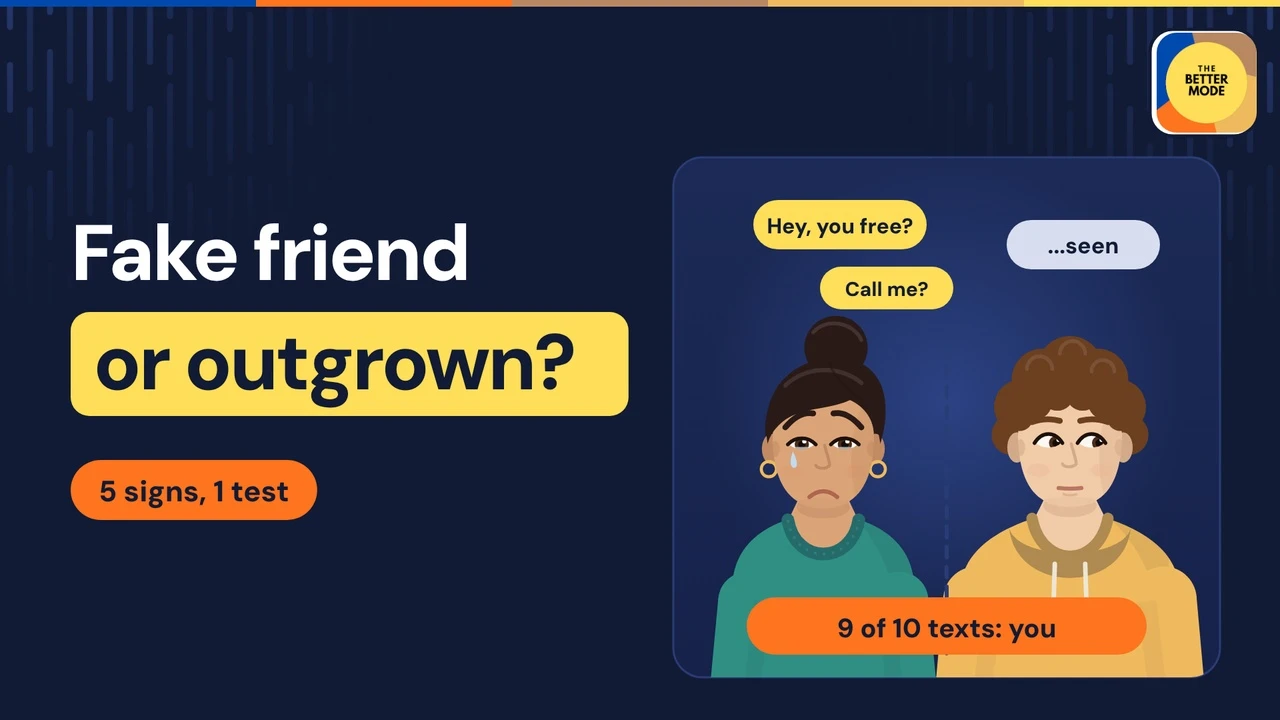
Prefer to watch first? The full video runs about six and a half minutes, and the article goes deeper into the studies.
Chapters
Key takeaways
- Count who starts the conversations. A long run of one-sided effort is a signal. One bad week is not.
- How someone reacts to your good news says a lot, at least in couples, where it has been studied most.
- Most friendships fade with distance and life changes, even when nobody did anything wrong.
- Reach out once, honestly, before you decide. People tend to underrate how much that is appreciated.
Five signs a friendship has become one-sided
Start with the pattern, not the feeling. Open the chat and count who started the last ten conversations. If it is nine of ten, that is worth noticing, though one count proves nothing by itself.
Recognising two or three of these does not make someone fake. It tells you where to look, and the sections below cover what the research says about each one.
Why the reaction to good news says so much
In 2004, Shelly Gable and colleagues ran four studies on sharing positive events. Sharing good news was linked to more positive mood and well-being, and the benefits were larger when the other person responded actively and constructively.
A 2006 study by Gable, Gonzaga and Strachman followed 79 dating couples. How partners responded to good news was more closely tied to relationship well-being, and to whether the couple broke up two months later, than how they responded to bad news.
The limit matters. Both studies looked at romantic partners, not friends, and the follow-up was short. It is a strong hint that a flat reaction to your wins means something, not proof about any one friend. One flat reaction on a bad day is not a pattern.
Why bad interactions weigh more than good ones
If you leave a friend feeling worse, that is not only in your head. In 1984, Karen Rook studied about 120 widowed women aged 60 to 89 and found that negative social interactions were more consistently and strongly related to well-being than positive ones.
A large review by Roy Baumeister and colleagues, titled Bad Is Stronger Than Good, found the same shape across many areas of life. Bad events and interactions tend to have more impact than good ones.
Rook’s sample was small and specific, and the result shows a link, not a cause. The review is stronger support for the general idea. Keep both in mind before you call a friendship toxic, because a few harsh moments can outweigh many pleasant ones in how you feel without the friend being fake.
What outgrowing a friend looks like
Outgrown friendships share some of the same signs, which is why this is so confusing. The difference is the history. There was a real stretch when the effort was mutual, and the distance came from changed lives, not from one person using the other.
Where it looks fake
- The effort was one-sided from early on
- Warmth depends on what you can give
- You feel smaller after contact
Where it is outgrown
- There was a real mutual stretch
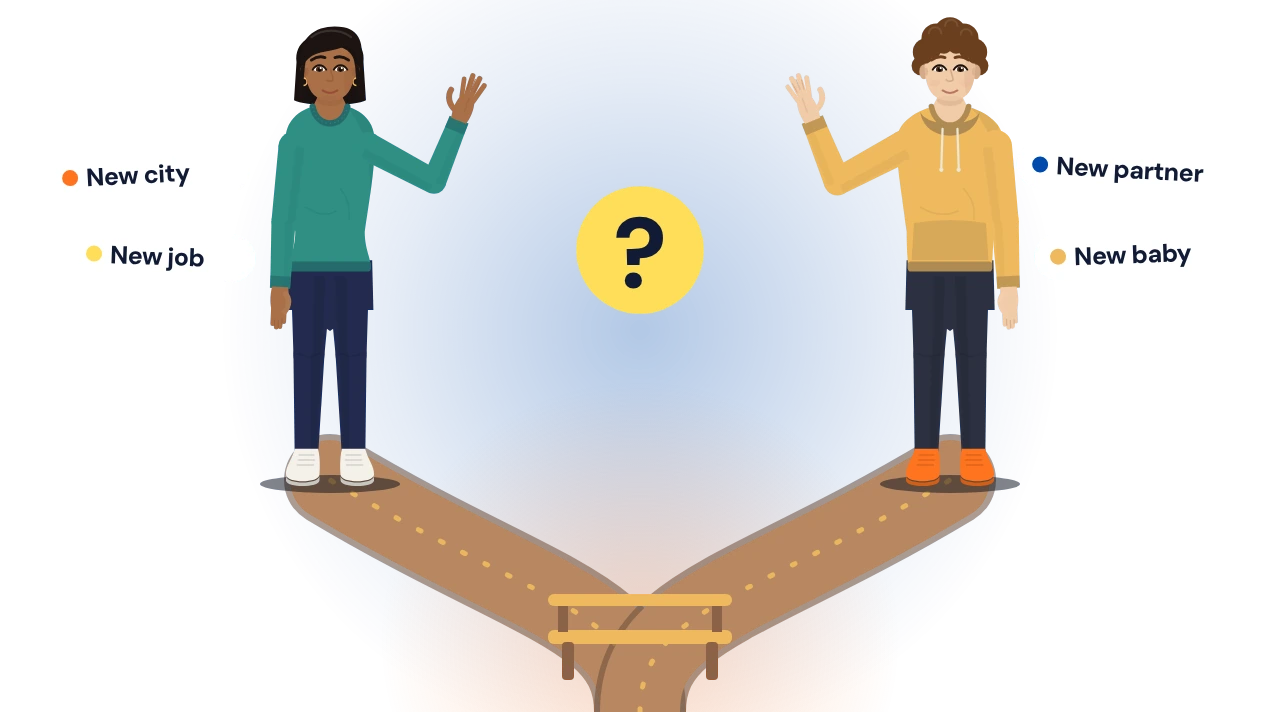
- Distance followed a job, city, partner or baby
- Nobody meant harm and the memories are still good
Neither of you became a bad person. Your lives moved to different places, and the friendship did not have enough shared time to keep up.
Why friendships fade with age
This is normal, and it shows up in the data. A 2013 meta-analysis by Cornelia Wrzus and colleagues pooled 277 studies. Friend networks shrank steadily through adulthood, family networks stayed about stable, and life events such as parenthood or a new job brought similar changes.
In 2011, Sam Roberts and Robin Dunbar followed 25 students through the move from school to university. Friendship closeness dropped faster than family closeness when contact and shared activities dropped. A 2015 follow-up found family ties stayed stable, friendships declined, and more effort slowed the decline.
Both studies used small student samples, and the Wrzus review counts network size, not closeness. The direction is still consistent: friendships need ongoing contact, and family ties survive without it. Jeffrey Hall estimated in 2018 that it takes roughly 50 hours together to go from acquaintance to casual friend and more than 200 to become a close friend, though estimates vary by sample.
Did it ever feel mutual?
This question separates the two cases. Go back to the early days. Was there a stretch when you both made the effort, or did you always carry it?
Be careful with memory here, because we are poor judges of who counts us as a friend. In 2016, Almaatouq and colleagues surveyed a class and analysed five friendship datasets. People expected about 94% of the friends they named to name them back. Roughly 53% of those ties were actually mutual.
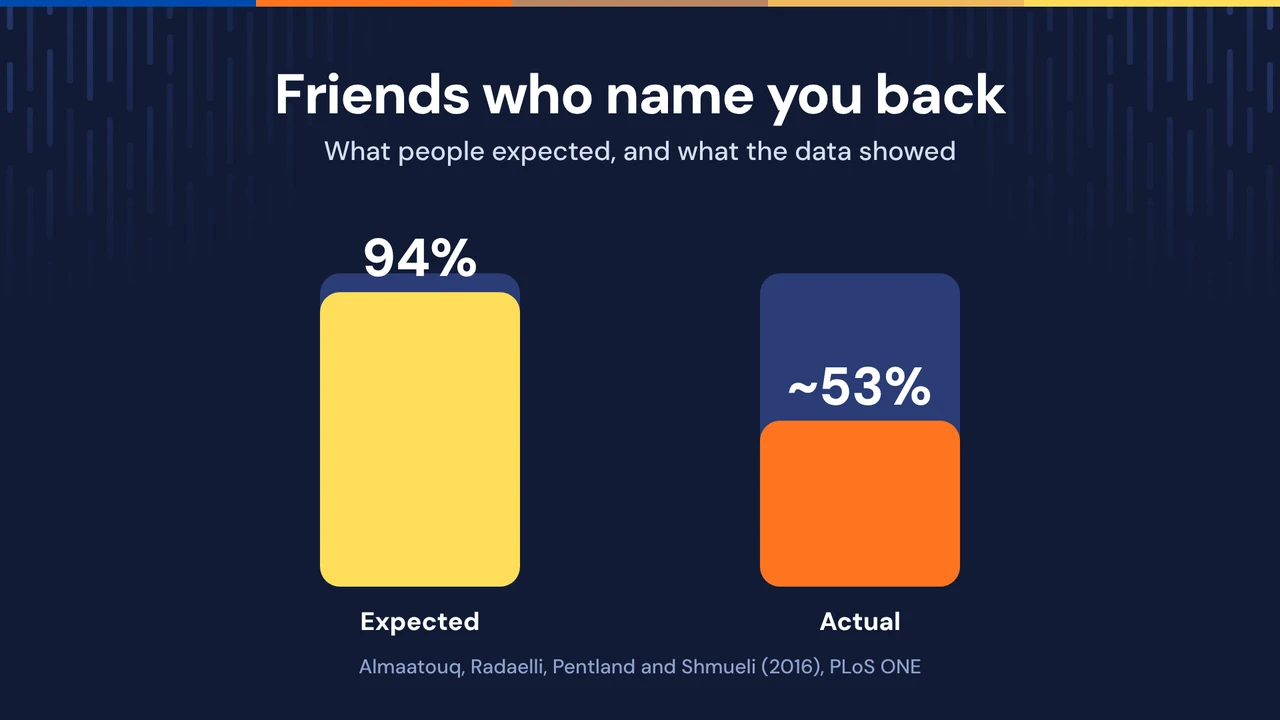
That does not mean half your friendships are fake. It means a friend you feel close to may not rank you the same way, and the reverse is also true. It is a reason to check the pattern of effort before you decide what someone feels.
One fair test before you decide anything
Before you write anyone off, reach out once, honestly and warmly, with no test hidden in it. Say you have been thinking about them, or that you miss talking. Then pay attention to the reply.
Research supports trying this. In experiments with more than 5,900 participants, Peggy Liu and colleagues found that people who reach out consistently underestimate how much the other person appreciates it, especially with weaker ties and unexpected contexts.
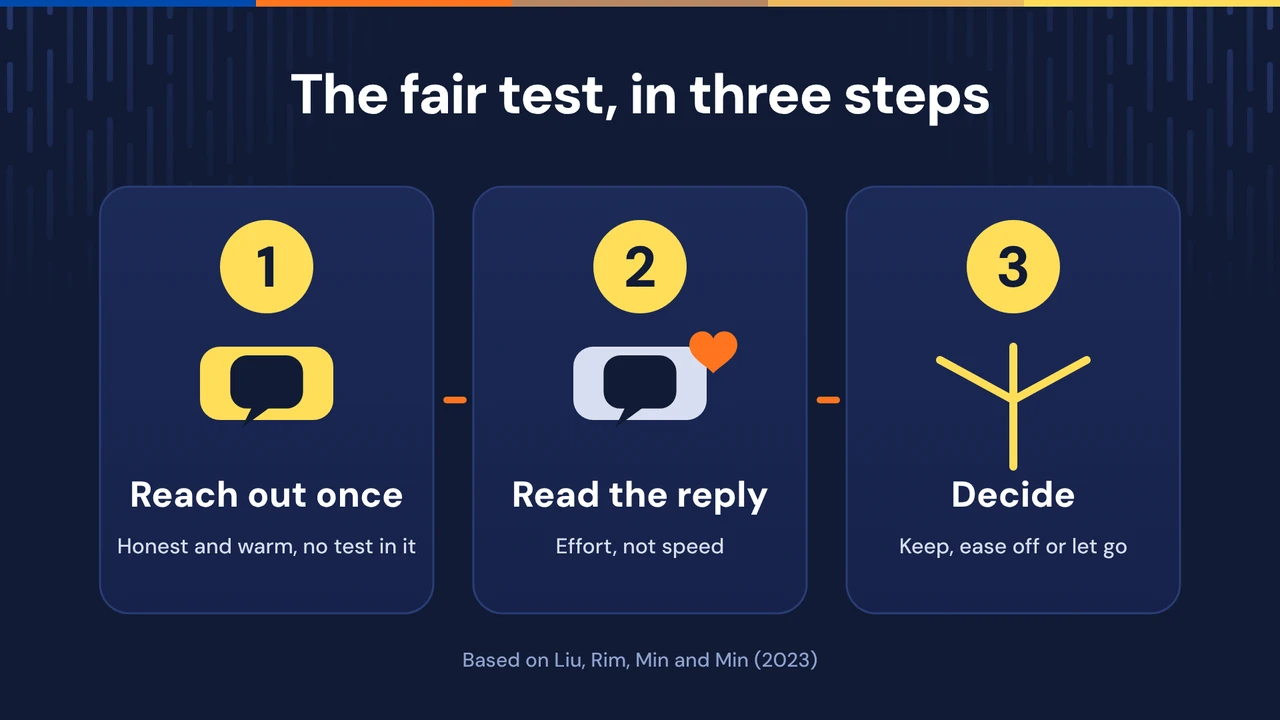
The authors studied contact with people the sender had a positive history with, not after a falling out, so it fits the outgrown case better than the fake one. Reading the reply is the fair part. A warm answer with a real plan points to outgrown. A late, short or empty answer, again and again, points the other way.
What to do in each case
If it was one-sided from the start
You do not need a confrontation. Pull back quietly and put the effort you were spending into people who put some back. Keep your replies friendly and short so the exit stays clean.
If it was real and you drifted
Keep it light. A birthday message, or a short note when something reminds you of them, is enough to keep the warmth alive without forcing the old closeness back.
If you are not sure
Run the fair test and give it a month. Send one honest message and one follow-up, then decide based on what comes back, not on what you fear.
Letting go also leaves room. In our view, the friendships worth keeping are the ones where the effort comes back to you, even if it comes back slowly.
What the research does not show
No study defines a fake friend or an outgrown friend. These are everyday labels, and the studies above only support the surrounding pieces.
Several findings come from couples or small student samples, and most are correlational, so they show links, not cause. Use them as guides for what to look at, not as a verdict on a person.
A note on mental health
This article is for education and is not medical or mental health advice. If a friendship or its loss is affecting your sleep, work or mood for weeks at a time, consider talking to a qualified professional.
Frequently asked questions
How do I know if a friend is fake?
There is no test that proves it. Look at the pattern over months: who starts the conversations, how they react to your good news, and how you feel afterwards. Then reach out once, honestly, and see how they respond.
Is it normal to outgrow friends?
Yes. A 2013 meta-analysis of 277 studies found that friend networks shrink through adulthood and change with life events such as parenthood or a new job. Drifting apart does not mean either person did something wrong.
Should I confront a friend who only reaches out when they need something?
You do not have to. A quiet pull-back works for many people. If the friendship matters to you, one calm, specific message about how it feels is fair, and their response will tell you a lot.
How many friendships are actually mutual?
In one 2016 study, people expected about 94% of the friends they named to name them back, while roughly 53% of those ties were mutual. The figures come from different parts of the paper, so treat them as a rough contrast.
Is it my fault when a friendship fades?
Usually it is nobody’s fault. Research on friendship decay finds that friendships lose closeness when contact and shared time drop, and that more effort slows the decline. It takes effort from both sides.
How often should I contact a friend I have drifted from?
No study gives a number. A light, regular touch such as a birthday message or a short note is enough for many friendships, and effort in either direction slows the decline.
References
- Almaatouq, A., Radaelli, L., Pentland, A., & Shmueli, E. (2016). Are you your friends’ friend? Poor perception of friendship ties limits the ability to promote behavioral change. PLoS ONE, 11(3), e0151588. DOI
- Baumeister, R. F., Bratslavsky, E., Finkenauer, C., & Vohs, K. D. (2001). Bad is stronger than good. Review of General Psychology, 5(4), 323-370. DOI
- Gable, S. L., Reis, H. T., Impett, E. A., & Asher, E. R. (2004). What do you do when things go right? The intrapersonal and interpersonal benefits of sharing positive events. Journal of Personality and Social Psychology, 87(2), 228-245. DOI
- Gable, S. L., Gonzaga, G. C., & Strachman, A. (2006). Will you be there for me when things go right? Supportive responses to positive event disclosures. Journal of Personality and Social Psychology, 91(5), 904-917. DOI
- Hall, J. A. (2018). How many hours does it take to make a friend? Journal of Social and Personal Relationships (online first, 15 March 2018). DOI
- Liu, P. J., Rim, S., Min, L., & Min, K. E. (2023). The surprise of reaching out: Appreciated more than we think. Journal of Personality and Social Psychology, 124(4), 754-771. DOI
- Roberts, S. G. B., & Dunbar, R. I. M. (2011). The costs of family and friends: An 18-month longitudinal study of relationship maintenance and decay. Evolution and Human Behavior, 32(3), 186-197. DOI
- Roberts, S. G. B., & Dunbar, R. I. M. (2015). Managing relationship decay: Network, gender, and contextual effects. Human Nature, 26, 426-450. DOI
- Rook, K. S. (1984). The negative side of social interaction: Impact on psychological well-being. Journal of Personality and Social Psychology, 46(5), 1097-1108. DOI
- Wrzus, C., Hanel, M., Wagner, J., & Neyer, F. J. (2013). Social network changes and life events across the life span: A meta-analysis. Psychological Bulletin, 139(1), 53-80. DOI
Written by The Better Mode Team
We turn psychology research into short, clear videos and articles. Claims are checked against the original studies, and we say so when the evidence is early. This content is educational and not a substitute for professional care.
More from Relationships
Short, clear reads on how your mind works.
Browse RelationshipsMake every day a little better
One short idea each week from The Better Mode. Free, and you can leave any time.